When talking about the marks and laebles of the board games. They are both familiar and strange to most board game players and designers. They are familiar with it because it can be seen in every board game or card game. Yet, quite a lot of information may be ignored, and they may not know the real meaning behind. To make it easy, Paper Board Games classifies products’ marks and labels into three categories: product, company, or law-related. This classification offers a basic understanding of the products’ information labels.
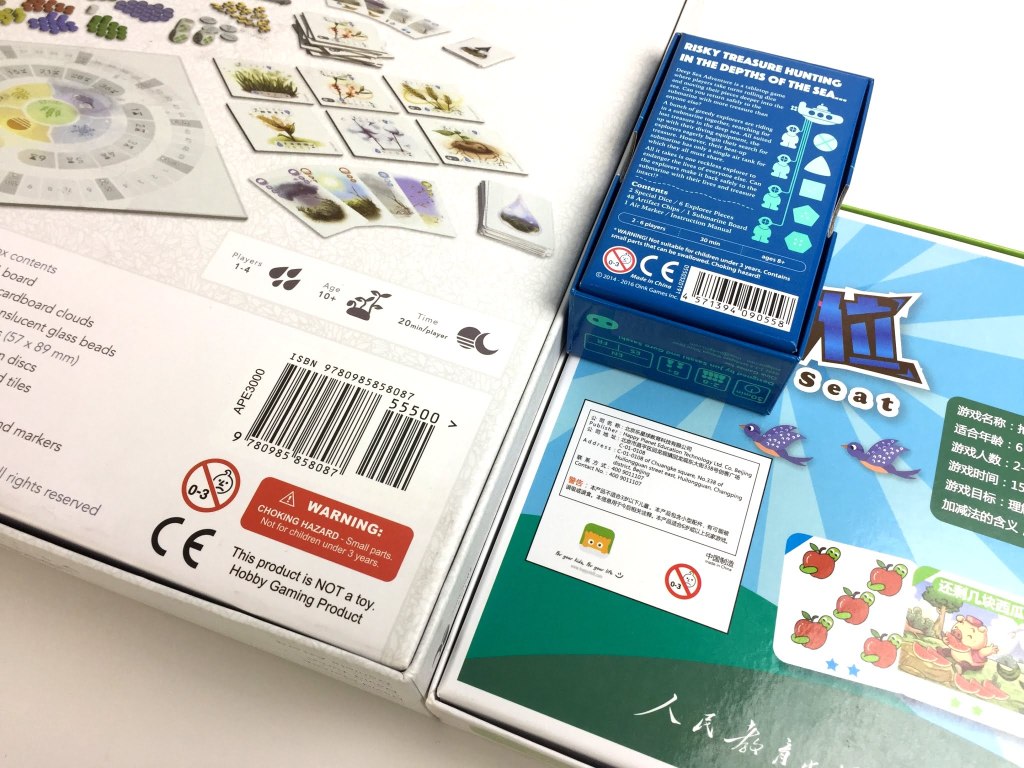
Firstly, marks and labels of board games related to the product itself.
- Board game name, board game type, the board game background and board game instruction. This part is like a personal CV which should be attracting and concise and ordinarily is put in the most conspicuous place of the box.
- Players Limit, time duaration and player age range. This information can be presented in different ways but should appear several times in different facets of the box so that it can be noticed from different angles.
- Componetnt list: usually attached with a picture showing all the gadgets inside the box. The list is not necessarily detailed but should contain the name and the sum of key components.
- QR code including EAN or UPC. Each type of products is matched with one unique QR code, just like people’s ID card. Board game publishers should fill in relevant information to apply for and buy special code before the software generates complete QR code. QR code is placed at the bottom or on the side of the box to make scanning easy.
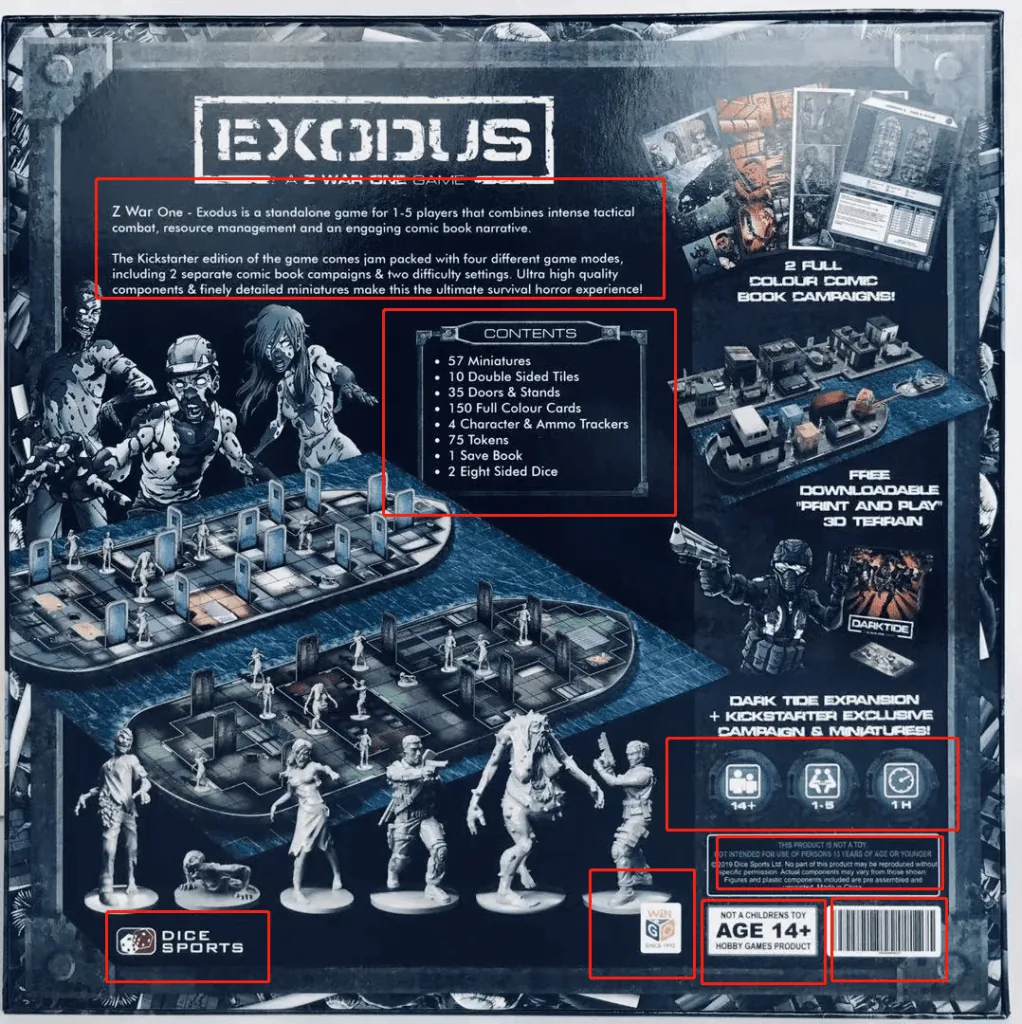
Secondly, marks and labels of board game indicates information about the board game publisher:
Paper Board Games recommends the following information to be standardized and generically applied to each baord game the board game companies published.
- Full name should be provided if the publisher is a registered company.
- Company address and after-sale phone number can increase customers’ purchasing confidence.
- QR code of publishers’ official website, public account and other social media account. They can serve as one publicity channel or lead to teaching videos, forum or other additional services to increase interaction between players and publishers.
- Date tracking code and anti-counterfeiting label. They are not a must. Board Game Publishers can choose to have it or not after considering production cost and other concerns.
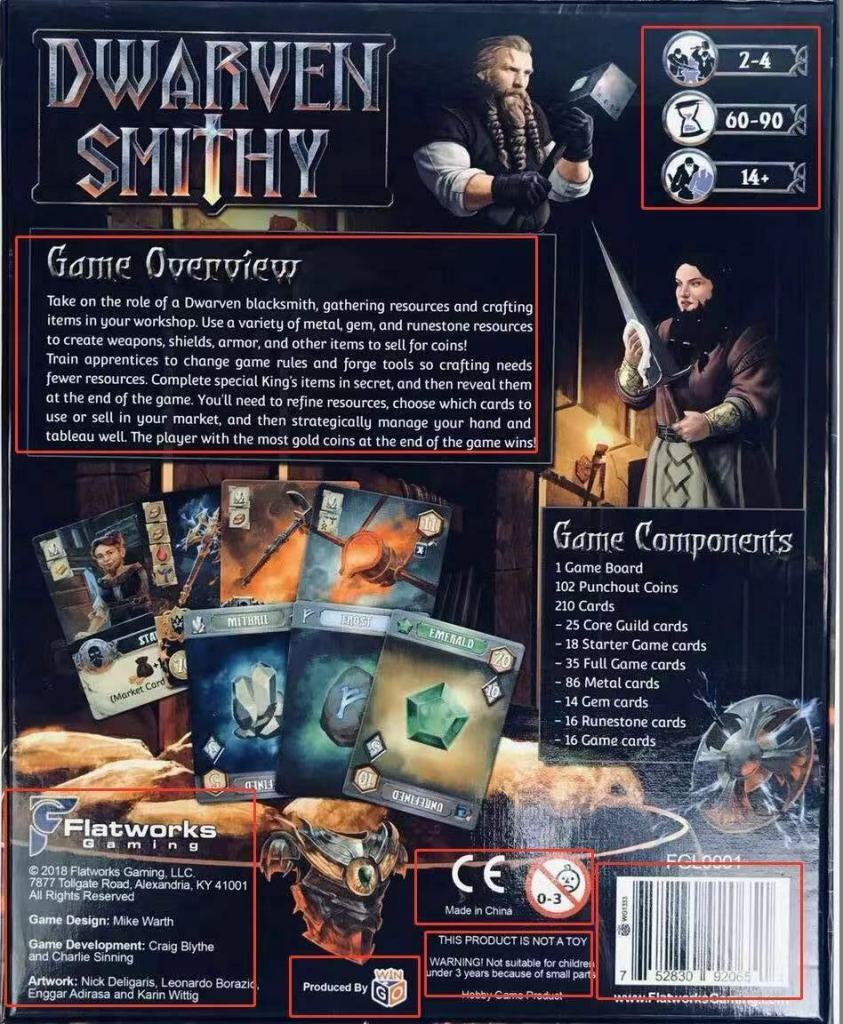
Thirdly, marks and labels of board game abided by the law or regulation:
No need to mention about the importance of following the law or regulation, different countries have different rules and regulations for board game or card game products. Specific icons and alarms should be printed on conspicuous places of the box. Board game products targeted at children under 14 years old are categorized as kids toy and need to be provided with a commodity inspection report which will only be attained after board game publisher send sample products for third-party testing. As requirements differ in different countries, we only list several typical examples here.
- Place of origin, e.g., Made in China,Made in Japan, etc.
- Certification label such as CE, 3C, NOT SUITABLE FOR KIDS UNDER 3, FSC and others. Please be aware that the size of the labels has already been standardized and cannot be changed at will.
- Marks or labels such as small object warning or suffocation warning.
Hope you can have a better understanding of all the proper usages of the marks and labels of the board game. Do your best to make good use of them. It will help for your future board game projects. Subscribe to Paper Board Games to know more valuable updates.